

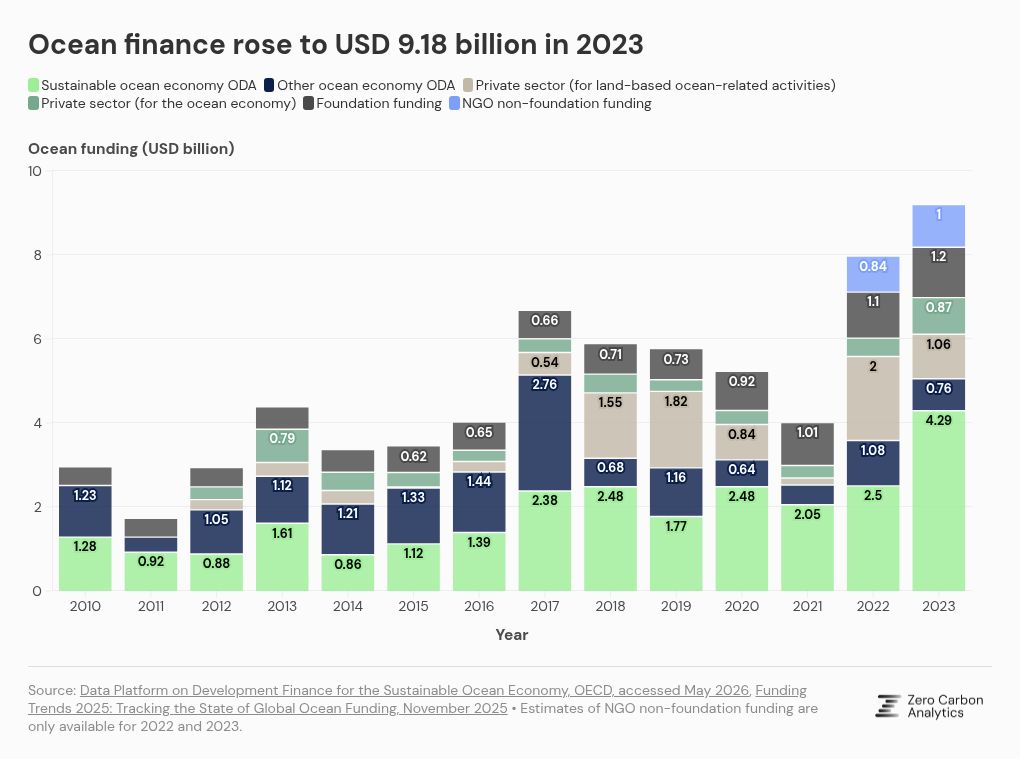
Public investment in the blue economy has nearly doubled over the past decade reflecting growing awareness of the importance of oceans and coastal ecosystems to global development. Governments and international institutions are increasingly directing funds toward sustainable fisheries marine conservation clean shipping renewable ocean energy and coastal resilience projects.
The blue economy has become a major focus for policymakers as climate change rising sea levels and marine pollution continue to threaten livelihoods and biodiversity across the world. Investments have expanded in areas such as offshore wind sustainable aquaculture ocean research and port modernization with many countries viewing the sector as a key driver of future economic growth.
Despite the rise in public spending experts say current funding levels remain far below what is needed to protect marine ecosystems and build long term sustainability. Developing nations and small island economies continue to face serious financial limitations even though they are among the most vulnerable to ocean related risks.
Environmental groups and financial analysts have warned that without stronger global cooperation and larger private sector participation many ocean conservation targets could remain out of reach. They argue that faster investment is necessary to restore damaged ecosystems improve coastal infrastructure and support communities dependent on marine industries.
The growing focus on the blue economy also reflects changing global priorities as nations seek greener and more sustainable economic models. While public investment momentum has strengthened over the years experts believe closing the funding gap will require coordinated action innovative financing and stronger commitments from both governments and businesses.