

New Delhi | July 20, 2026
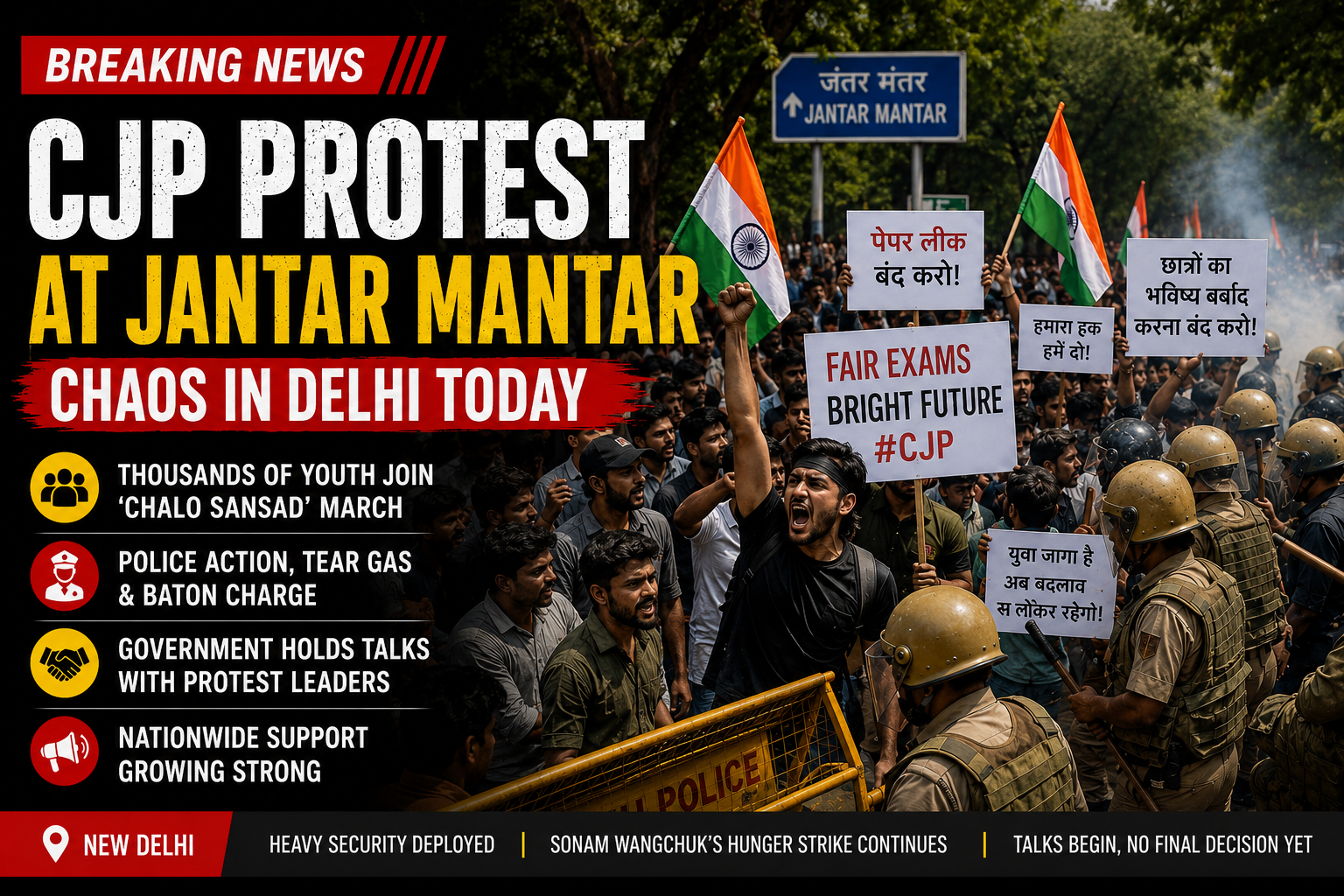
Thousands of students and young protesters gathered in Delhi on Monday as the Cockroach Janta Party (CJP) launched its much-awaited ‘Chalo Sansad’ march, turning the area around Jantar Mantar into the center of one of India’s biggest youth-led demonstrations this year.
The protest, which began peacefully during the morning hours, intensified after marchers attempted to move towards Parliament. Delhi Police had already deployed heavy security, erected multiple barricades, and restricted access to sensitive areas around the Parliament complex.
As protesters advanced, clashes were reported at several points. Videos circulating on social media showed police using tear gas and batons to disperse crowds, while protesters alleged excessive use of force. Delhi Police, however, denied several viral claims and said action was taken to maintain law and order.
Why Are Students Protesting?
The CJP movement has gained nationwide support over the past few weeks by raising concerns about examination transparency, alleged paper leaks, delayed recruitment, and unemployment. Protesters are demanding greater accountability and long-term reforms in India’s education and recruitment systems.
Many participants carried books and the Indian national flag, describing the protest as a peaceful movement representing students and job aspirants from across the country.
Sonam Wangchuk’s Hunger Strike Adds Momentum
The ongoing movement received additional attention after education activist Sonam Wangchuk continued his hunger strike in support of students’ demands. His protest has become one of the major symbols of the campaign, drawing support from student groups, activists, and citizens across several states.
Government Holds First Round of Talks
In a significant development, representatives of the movement met senior Union Minister J.P. Nadda. According to reports, the government sought time to examine the demands raised by protesters. While no final agreement has been announced, both sides described the meeting as an important first step toward dialogue.
Delhi Police Responds
Delhi Police said that the march towards Parliament was not authorised and confirmed that security arrangements were tightened to prevent any breach of restricted zones. Officials also stated that legal action would be taken wherever violence against police personnel or damage to public property is established.
Nationwide Support Growing
Support for the movement is no longer limited to Delhi. Demonstrations and solidarity gatherings have been reported from cities including Nagpur, Mumbai, Bengaluru, Goa, and several university campuses, reflecting growing concern among students and young job seekers.
What’s Next?
As evening approached, many protesters remained gathered near Jantar Mantar despite police restrictions. Organisers have said the movement will continue until meaningful discussions lead to concrete action on education reforms and recruitment transparency.
With Parliament in session and national attention focused on Delhi, the coming days are expected to be crucial in determining how the government responds to one of the largest youth-led protests seen in recent years.