

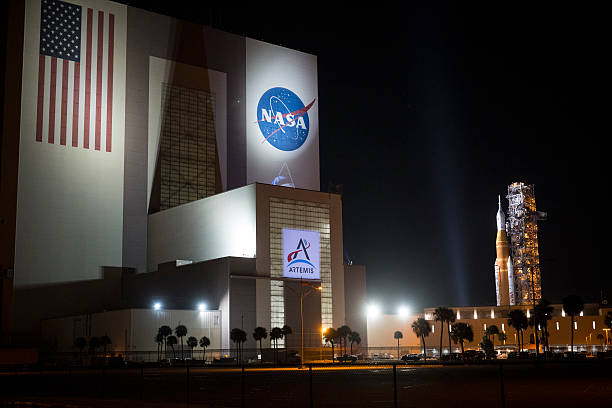
NASA’s Artemis II mission remains one of the most exciting global science and space stories of 2026.The mission has captured worldwide attention as the first crewed deep-space mission since the Apollo era.
NASA’s Artemis II mission remains one of the biggest science and space stories trending globally in 2026 after successfully completing humanity’s first crewed mission around the Moon in more than 50 years. The historic mission has reignited worldwide interest in deep-space exploration and future plans for human missions to Mars.
Artemis II launched aboard NASA’s powerful Space Launch System (SLS) rocket from Kennedy Space Center in Florida on April 1, 2026. The mission carried four astronauts — Reid Wiseman, Victor Glover, Christina Koch, and Canadian astronaut Jeremy Hansen — aboard the Orion spacecraft during a nearly 10-day journey around the Moon.
NASA confirmed the spacecraft safely returned to Earth on April 10 after traveling farther into deep space than any crewed mission since the Apollo era. Artemis II also became the first mission to send a woman, a person of color, and a non-American astronaut into deep-space lunar flight.
The mission continues trending online because NASA recently released thousands of new images captured during the journey, including breathtaking photographs of Earth from lunar orbit and high-resolution views of the Moon’s far side. Space enthusiasts and social media users worldwide have been sharing the images across Instagram, Reddit, TikTok, and X.
Scientists are also excited about discoveries made during the mission. According to Space.com, Artemis II astronauts observed unusual meteoroid impact flashes on the Moon’s far side — a rare phenomenon difficult for cameras to capture from Earth. Researchers believe these observations could help improve understanding of lunar surface activity and future astronaut safety for long-term Moon missions.
After reentering Earth’s atmosphere at nearly 25,000 miles per hour, the Orion spacecraft endured temperatures reaching approximately 5,000°F (2,760°C). Photos released by NASA showing the heavily charred Orion capsule quickly went viral online, symbolizing the extreme conditions involved in deep-space travel. Engineers are now studying the spacecraft’s heat shield to improve future Artemis missions.
NASA says Artemis II is a major step toward future missions that aim to establish a long-term human presence on the Moon and eventually support crewed missions to Mars. Upcoming Artemis missions are expected to involve lunar landers, Moon-orbit space stations, and new astronaut training systems currently being developed with companies like SpaceX and Blue Origin.
The Artemis program is also becoming a major international collaboration effort. More than 60 countries have now signed the Artemis Accords, a framework supporting peaceful space exploration and lunar cooperation between governments and private companies.
interest in space exploration grows again worldwide, experts believe Artemis II may become one of the defining scientific achievements of the decade — similar to how the Apollo missions inspired previous generations.
Artemis II is designed to send astronauts around the Moon, marking a major milestone in humanity’s return to deep-space exploration.
The mission is part of NASA’s broader Artemis program, which aims to establish long-term lunar exploration and eventually support future missions to Mars.
Space enthusiasts, scientists, and media organizations worldwide continue discussing the mission’s technology, astronaut crew, and future implications for space travel.
NASA officials say the mission represents a new era of international collaboration and scientific advancement. Several countries and private space companies are also contributing technologies and research to support future lunar programs.
The Artemis program is expected to play a crucial role in developing sustainable space infrastructure, advanced spacecraft systems, and future human exploration missions beyond Earth orbit.
Social media platforms remain filled with videos, images, and discussions related to Artemis II, making it one of the most viral science topics globally today.